
Content clipping is cutting long-form content (podcasts, videos, livestreams) into short clips posted across TikTok, Reels, Shorts and X.
It works because clips out-reach the source: NPR cited a streamer whose clips average 700,000 views versus 33,000 on the livestream.
Brands use it as low-cost, native-looking distribution, now a multi-billion-dollar channel.
You can do it yourself, hire a clipper, or run it as a managed service on accounts you own.
The simple definition
Content clipping is the practice of taking long-form content you already have, a podcast episode, a YouTube video, a livestream, a keynote, and cutting it into short clips of roughly 20 to 60 seconds, then posting those clips across short-form platforms like TikTok, Instagram Reels, YouTube Shorts and X. One hour of long-form typically yields 10 to 30 usable clips.
How it works, step by step
- Find the moments. Pull the self-contained segments with a strong hook, story or point.
- Cut and format. Trim tight, add captions, and format vertically for each platform.
- Lead with the hook. The first three seconds decide whether the clip gets watched.
- Distribute consistently. Post across accounts and markets on a steady cadence.
For the full workflow, see how to repurpose long-form content.
Why it works, and why brands use it
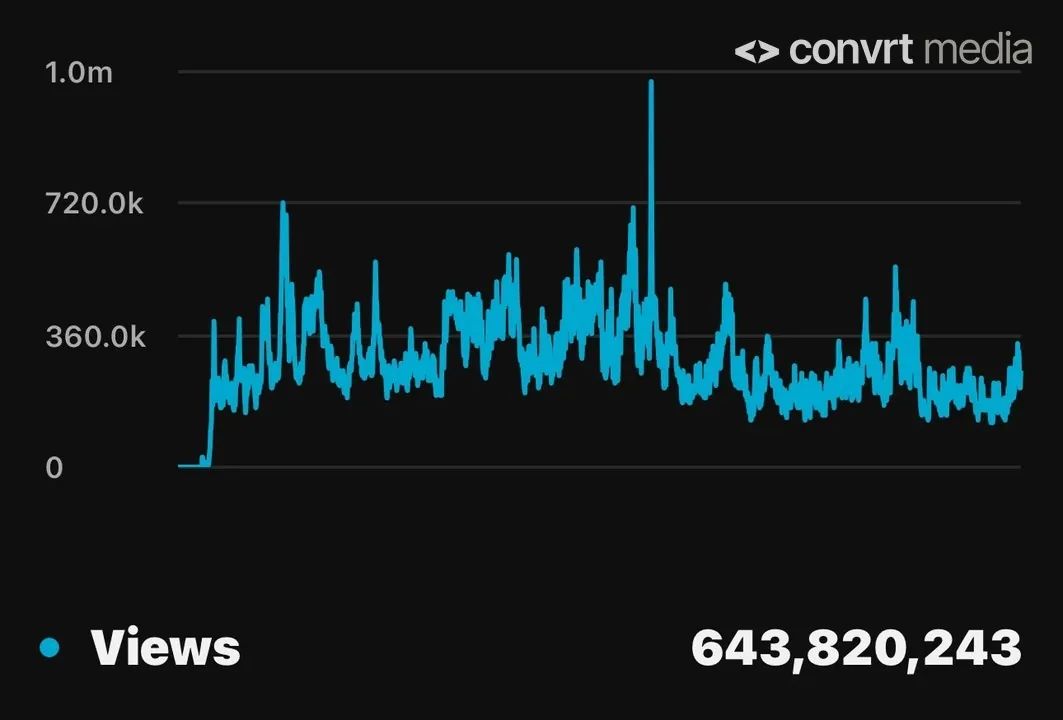
Clipping works because a clip usually reaches far more people than the long-form it came from. NPR reported that the streamer Hasan Piker’s average livestream draws about 33,000 viewers, while his average clip is viewed more than 700,000 times. That leverage, plus a low cost of roughly $1 to $5 per thousand views, is why brands from fintechs to founders have poured in. It has grown into what LinkedIn called a roughly $3 billion industry. For the wider picture, read the clipping economy explained.
Doing it yourself versus a managed service
You can clip your own content, hire a freelance clipper, or run it as a managed service. The workflow is simple to understand and hard to sustain, since it means finding moments, editing to a standard, and posting daily across markets, forever. That is why many founders use a managed team that distributes on accounts they own, with attribution. See agency versus hiring an editor.
Want this run for you on accounts you own? See how Content Teams works →
Frequently asked questions
Content clipping is cutting long-form content such as podcasts, videos and livestreams into short clips of about 20 to 60 seconds, then posting them across TikTok, Instagram Reels, YouTube Shorts and X to reach new audiences. One hour of long-form usually yields 10 to 30 clips.
You find the strongest self-contained moments in your long-form content, cut them tight, add captions, format vertically, lead with the hook in the first three seconds, and distribute consistently across accounts and platforms.
Because clips out-reach the long-form they came from and cost little. NPR cited a streamer whose clips average 700,000 views versus 33,000 on the livestream, and clipping runs roughly $1 to $5 per thousand views, a fraction of traditional advertising.